The Names of God: Knowing Who God Is and His Character

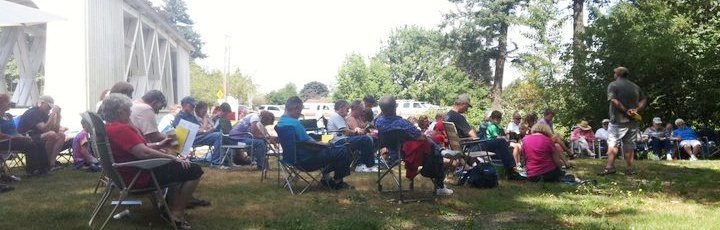
For those who could not join us at the park for worship, here is one of five spiritual exercises used this past Sunday to draw us close to God. 


The Names of God used in the Bible act as a roadmap for learning about the character of God. Since the Bible is God’s Word to us, the names He chooses in scripture are meant to reveal His true nature to us.

In our twentieth century Western culture, personal names are little more than labels to distinguish one person from another. A nickname may say a little something about the person, but not necessarily about their character.

But in Scripture, the names of God are like miniature portraits and promises. In Scripture, a person’s name identified them and stood for something specific. This is especially true of God.

If our trust in God is going to grow stronger, we must know Who He Is. As you become conscious of a way God reveals himself to you (or shows his care for you), you begin experiencing him in a personal way, which can help develop your relationship with Him.

This spiritual growth exercise will help you focus on God’s character and gain confidence in his love and care for you:

1. Quiet yourself before the Lord, allowing your focus to move from yourself and your circumstances to God and Who He Is.

2. Choose one of the Names of God and slowly read the scripture/s that speaks about this characteristic. Meditate on this quality of God and what it means to you.

3. Ask yourself: Have I experienced this characteristic of God personally? (Take time to reflect on that experience and what it meant to you personally. Thank Him and praise Him for being this for you.)

[If you haven’t experienced this characteristic, have you known others who have or might need to? Do you have a need for this quality of God in your life? How could it help strengthen your relationship with God?]

4. End this spiritual growth exercise with a time of talking and listening to God.

Here are some NAMES OF GOD for you to use in doing this spiritual growth exercise:

A Mighty God (Isa. 9:6)

A Sanctuary (Isa. 8:14)

Abba Father [Daddy] (Rom. 8:15)

Advocate (I Jn. 2:1)

All Knowing (I Cor. 2:10-11)

Author & Perfector of Our Faith (Heb. 12:2)

Bread of Heaven (Jn. 6:32)

Comfort in Sorrow (Jer. 8:18)

Deliverer (Psa. 18:2)

Everlasting God (Psa. 90:1-2, Isa. 40:28)

Everywhere

Faithful (Deut. 7:9, Lam. 3:22-23)

God Most High (Gen. 14:18-22)

God of All Comfort (II Cor. 1:3)

God of Truth (Psa. 31:5)

Healer (Exo. 15:22-26, Psa. 103:3)

Holy One (Psa. 71:22, Isa. 43:3)

Judge (Psa. 7:8, 96:13)

King of Glory (Psa. 24:7-10)

King of Kings (Rev. 19:16, I Tim. 6:15)

Lawgiver and Judge (James 4:12)

Life (Jn. 11:25)

Life Giver (Gen. 2:7)

Light of the World (Jn. 8:12)

Living Water (Jn. 4:10)

Lord Most High (Psa. 7:17)

Love (Jn. 3:16, Jer. 31:3)

Master (Luke 8:24, Gen. 15:2)

Mediator (I Tim. 2:5)

Mighty One (Psa. 132:2, Isa. 1:24)

My Banner (Exo. 17:15)

My Deliverer (Psa. 18:2)

My Fortress (Jer. 16:19)

My Hope (Rom. 15:13, I Tim. 1:1)

My Rock (Psa. 42:9, Psa. 18:2)

My Song (Exo. 15:2)

Our Guide (Psa. 48:14)

Peace (Micah 5:5, Judges 6:24, Eph. 2:14)

Prince of Peace (Isa. 9:6)

Provider (Gen. 22:14)

Redeemer (Job 19:25)

Refuge (Isa. 25:4)

Resurrention (Jn. 11:25)

Righteous One (Psa. 7:9)

Savior (Isa. 43:3, Jn. 4:42, Psa. 25:5)

Shepherd (Psa. 23)

Shield (Psa. 3:3, 18:30, Deut. 33:29)

Sovereign Lord (Acts 4:24)

Strong and Mighty (Psa. 24:8)

Teacher (Isa. 48:17, Matt. 26:18)

The Door (Jn. 10:7)

The First and the Last (Isa. 44:6, Rev. 22:13)

The God Who Sees Me (Gen. 16:13)

The One Who Sustains Me (Psa. 54:4)

The Word (Jn. 1:1)

Wonderful Counselor (Ia. 9:6)

May you grow in your relationship with God as you meditate on these Names of God and experience Him as these characteristics in your life!

The Method of Centering Prayer

For those who could not join us at the park for worship, here is one of five spiritual exercises used this past Sunday to draw us close to God.

Centering Prayer is a method of prayer, which prepares us to receive the gift of God’s presence, traditionally called contemplative prayer. It consists of responding to the Spirit of Christ by consenting to God’s presence and action within. It furthers the development of contemplative prayer by quieting our faculties to cooperate with the gift of God’s presence.

Centering Prayer facilitates the movement from more active modes of prayer — verbal, mental or affective prayer — into a receptive prayer of resting in God. It emphasizes prayer as a personal relationship with God. At the same time, it is a discipline to foster and serve this relationship by a regular, daily practice of prayer. It is Trinitarian in its source, Christ-centered in its focus, and ecclesial in its effects; that is, it builds communities of faith.

Centering Prayer is drawn from ancient prayer practices of the Christian contemplative heritage, notably the Fathers and Mothers of the Desert, Lectio Divina, (praying the scriptures), The Cloud of Unknowing, St. John of the Cross and St. Teresa of Avila.. It was distilled into a simple method of prayer in the 1970’s by three Trappist monks, Fr. William Meninger, Fr. Basil Pennington and Abbot Thomas Keating at the Trappist Abbey, St. Joseph’s Abbey in Spencer, Massachusetts.

The Guidelines

  1. Choose a sacred word as the symbol of your intention to consent to God’s presence and action within.
  2. Sitting comfortably and with eyes closed, settle briefly and silently introduce the sacred word as the symbol of your consent to God’s presence and action within.
  3. When you become aware of thoughts, return ever-so-gently to the sacred word.
  4. At the end of the prayer period, remain in silence with eyes closed for a couple of minutes.

Explanation of the Guidelines   

1. Choose a sacred word as the symbol of your intention to consent to God’s presence and action within.”

  • The sacred word expresses our intention to be in God’s presence and to yield to the divine action.
  • The sacred word should be chosen during a brief period of prayer asking the Holy Spirit to inspire us with one that is especially suitable for us.
  • Examples: Lord, Jesus, Abba, Father, Mother (Other possibilities: Love, Peace, Shalom)
  • Having chosen a sacred word, we do not change it during the prayer period, for that would be to start thinking again.
  • A simple inward gaze upon God may be more suitable for some persons than the sacred word. In this case, one consents to God’s presence and action by turning inwardly toward God as if gazing upon him. The same guidelines apply to the sacred gaze as to the sacred word.

2. Sitting comfortably and with eyes closed, settle briefly and silently introduce the sacred word as the symbol of your consent to God’s presence and action within.”

  • By “sitting comfortably” is meant relatively comfortably; not so comfortably that we encourage sleep, but sitting comfortably enough to avoid thinking about the discomfort of our bodies during this time of prayer.
  • Whatever sitting position we choose, we keep the back straight.
  • If we fall asleep, we continue the prayer for a few minutes upon awakening if we can spare the time.
  • Praying in this way after a main meal encourages drowsiness. Better to wait an hour at least before Centering Prayer. Praying in this way just before retiring may disturb one’s sleep pattern.
  • We close our eyes to let go of what is going on around and within us.
  • We introduce the sacred word inwardly and as gently as laying a feather on a piece of absorbent cotton.

3. When you become aware of thoughts, return ever-so-gently to the sacred word.

  • “Thoughts” is an umbrella term for every perception including sense perceptions, feelings, images, memories, reflections, and commentaries.
  • Thoughts are a normal part of Centering Prayer.
  • By “returning ever-so-gently to the sacred word”, a minimum of effort is indicated. This is the only activity we initiate during the time of Centering Prayer.
  • During the course of our prayer, the sacred word may become vague or even disappear.

4. At the end of the prayer period, remain in silence with eyes closed for a couple of minutes.”

  •  If this prayer is done in a group, the leader may slowly recite the Lord’s Prayer during the additional 2 or 3 minutes, while the others listen.
  • The additional 2 or 3 minutes give the psyche time to readjust to the external senses and enable us to bring the atmosphere of silence into daily life.

Some Practical Points

  • The minimum time for this prayer is 20 minutes. Two periods are recommended each day, one first thing in the morning, and one in the afternoon or early evening.
  • The end of the prayer period can be indicated by a timer, providing it does not have an audible tick or loud sound when it goes off
  • The principal effects of Centering Prayer are experienced in daily life, not in the period of Centering Prayer itself.

Physical Symptoms:

  • We may notice slight pains, itches, or twitches in various parts of the body or a generalized restlessness. These are usually due to the untying of emotional knots in the body.
  • We may also notice heaviness or lightness in the extremities. This is usually due to a deep level of spiritual attentiveness.
  • In either case, we pay no attention, or we allow the mind to rest briefly in the sensation, and then return to the sacred word.
  • A support group praying and sharing together once a week helps maintain one’s commitment to the prayer.

Points for Further Development

  • During the prayer period various kinds of thoughts may be distinguished.
    • Ordinary wanderings of the imagination or memory.
    • Thoughts that give rise to attractions or aversions.
    • Insights and psychological breakthroughs.
    • Self-reflections such as, “How am I doing?” or, “This peace is just great!”
    • Thoughts that arise from the unloading of the unconscious.
  • During this prayer, we avoid analyzing our experience, harboring expectations or aiming at some specific goal such as:
    • Repeating the sacred word continuously
    • Having no thoughts.
    • Making the mind a blank.
    • Feeling peaceful or consoled.
    • Achieving a spiritual experience.

What Centering Prayer is not:   

  • It is not a technique.
  • It is not a relaxation exercise.
  • It is not a form of self-hypnosis.
  • It is not a charismatic gift.
  • It is not a para-psychological phenomenon.
  • It is not limited to the “felt” presence of God.
  • It is not discursive meditation or affective prayer


Reflection and Reconciliation

For those who could not join us at the park for worship, here is one of five spiritual exercises used this past Sunday to draw us close to God.

(Items needed:  Journals, Bibles, pencils/pens)

For most folks, this is a very difficult experience.  The idea of spending a lengthy amount of time confessing sins seems incredible.  But after you have gotten past the “big” sins, the Spirit of God can begin to bring back all the lesser sins that you have failed to acknowledge and failed to deal with in your life.  Do not rush through this – it sets a tone for your overall experience.

This time of cleansing and healing is crucial to entering into God’s presence.  If you have difficulty naming your sins, just sit quietly in the Lord’s presence and ask Him to bring back to your mind any unconfessed sins you need to deal with.  You may be surprised at the results.

a time to confess

Have you sinned today? Have you made your soul old? Do not despair; do not despond, but renew it by repentance and tears and confession, and by doing good things. 

And never stop doing this.

John Chrysostom {AD 347-407}

To begin, find a place by yourself and get comfortable (not too comfortable).  Spend a considerable amount of time in personal confession.  Be very specific (you may want to journal this time)

  • Name people you have offended.
  • Tell God of the failures that still haunt your memory.
  • Detail sins of omission and commission (known and unknown)

After the time of personal confession, slowly read through Psalm 51 several times – (Note: Psalm 51 was written by David after his terrible sin with Bathsheba.)  Make as many of the words of the Psalm as possible your own, telling the Lord how you identify with David (again you may want to journal this time).

Then, go in deep imagination to the Cross – see Jesus dying for you there.  Take a moment to reflect what suffering Jesus endured.  Then talk to Jesus about grief over your sin and hear His words of forgiveness to you.  Remember to thank Jesus for his grace and forgiveness.

Psalm 51

For the director of music. A psalm of David. When the prophet Nathan came to him after David had committed adultery with Bathsheba.

1 Have mercy on me, O God,
according to your unfailing love;
according to your great compassion
blot out my transgressions.

2 Wash away all my iniquity
and cleanse me from my sin.

3 For I know my transgressions,
and my sin is always before me.

4 Against you, you only, have I sinned
and done what is evil in your sight,
so that you are proved right when you speak
and justified when you judge.

5 Surely I was sinful at birth,
sinful from the time my mother conceived me.

6 Surely you desire truth in the inner parts [a] ;
you teach [b] me wisdom in the inmost place.

7 Cleanse me with hyssop, and I will be clean;
wash me, and I will be whiter than snow.

8 Let me hear joy and gladness;
let the bones you have crushed rejoice.

9 Hide your face from my sins
and blot out all my iniquity.

10 Create in me a pure heart, O God,
and renew a steadfast spirit within me.


11 Do not cast me from your presence
or take your Holy Spirit from me.

12 Restore to me the joy of your salvation
and grant me a willing spirit, to sustain me.

13 Then I will teach transgressors your ways,
and sinners will turn back to you.

14 Save me from bloodguilt, O God,
the God who saves me,
and my tongue will sing of your righteousness.

15 O Lord, open my lips,
and my mouth will declare your praise.

16 You do not delight in sacrifice, or I would bring it;
you do not take pleasure in burnt offerings.

17 The sacrifices of God are [c] a broken spirit;
a broken and contrite heart,
O God, you will not despise.

18 In your good pleasure make Zion prosper;
build up the walls of Jerusalem.

19 Then there will be righteous sacrifices,
whole burnt offerings to delight you;
then bulls will be offered on your altar.

All-Church Pot Luck Picnic

Worship & Potluck @ Pioneer Park in Stayton

On Sunday, August 12th at 10:45am we will again join at Pioneer Park in Stayton for worship with a potluck lunch afterward on the historic bridge.  Come for worship as it will begin at 11:00am.  Lunch will begin at noon!  Don’t miss this time to enjoy worshiping in God’s creation.  Bring chairs to sit on and a dish to pass! As has been tradition, there will be games for the children and hiking trails for the adults! Look forward to you joining us in Stayton.  For directions to the park:  Click Here.

Besides the Bible Book Club

Upcoming Books

July 21: Pilgrim at Tinker Creek, by Annie Dillard

August 18: The River Why, by David James Duncan

Location Gear-Up Espresso:  430 McClaine Street

Time  8:00 a.m. – 9:30 a.m.

Meeting the third Saturday of every month, the Besides the Bible Book Club is an ongoing conversation about the really good books – the books with the power to surprise, delight, challenge, and change us. Bring your ideas for future discussion books to the July 21 gathering. That morning, we will be choosing discussion books for the next several months. I will stock two copies of each book in the church library to check out.

Questions? Feel free to email John at johnepattison@gmail.com.

On July 21, we’ll discuss Pilgrim at Tinker Creek, which won the 1975 Pulitzer Prize and was included in Modern Library’s list of 100 Best Nonfiction Books of the 20th century. It was also included in my book, Besides the Bible, as one of the 100 books “every Christian should read.” Here is a brief excerpt from the essay I wrote about Dillard’s masterpiece:

Christian philosophers and theologians have been saying for centuries that there are two books of God: the Book of Scripture and the Book of Nature. Francis Bacon called them “the book of God’s word” and “the book of God’s works.” (This passage from Bacon’s The Advancement of Learning appears as an epigram in On the Origin of Species.) St. Augustine and St. Bonaventure called them Liber Naturae and Liber Scripturae; St. John Chrysostom called them the Book of Scripture and, my personal favorite, the Book of Creatures. Theologians argue passionately about these two “books” – many Reformers rejected the existence of the second altogether – but other heroes and heroines of the faith have affirmed the Book of Nature as a source of revelation.

While American theological education is focused more on systematic theology than ecological systems, I don’t think it’s far-fetched to imagine seminaries offering classes on forest exposition and the proper exegesis of a river in flood. When they do, one of the books on the syllabus will be Pilgrim at Tinker Creek, by Annie Dillard. Pilgrim at Tinker Creek is Dillard’s close-read of her neighborhood in Virginia’s Blue Ridge Mountains…

Dillard has said that she considers Pilgrim at Tinker Creek to be, first and foremost, a work of theology. I think her contribution to American spirituality is a call to really see. In a virtual reality culture of blogs, status updates, tweets, and memes, The Pilgrim at Tinker Creek displays an attentiveness and watchfulness of the natural world that has become increasingly difficult even as it becomes more and more essential…

RENEW: VBS 2012

July 16-20,  9am-noon

Grounded in Jesus’ Parable of the Sower, ReNew: The Green VBS brings together the Bible and environmental stewardship. From tiny towns to huge cities, kids grow in faith as they play, learn, sing, and work toward renewing their congregations and communities.

By serving in the community and inviting the community into church, kids demonstrate that being green can be easy, faithful, and fun. Although current threats to our environment can seem scary, ReNew is about hope, opportunity, and service. Kids and congregations lead the way as stewards of the earth.

What happens when heads, hearts, and hands are in harmony? Kids grow in faith, have fun, and change the world.

To find out more or to sign your child up for VBS, you will find forms in the back of the sanctuary each week leading up to VBS.  For more information or to get involved with helping at VBS please contact Deborah Climer, Children’s Pastor @ abcdclimer@gervais.com  or the church office at 503.873.5131 or silvertonfriends@frontier.com

We look forward to your children joining us to grow in faith, have fun, and change the world!


Take The Time To Re-form Ourselves Spiritually

Summer has finally arrived! It is time to go to the lake cottage, do some landscaping, plant a garden, even go on a vacation and find time away. All of these are beneficial and often greatly needed in our busy lives.

As my family and I started preparing for our summer vacation, I began to realize that much of my summer had been planned before it ever arrived and looked to be as stressful as the other 10 months of the year. There is so much going on in our summer schedules that we return from the cottage or from family vacations more exhausted than when we left. The landscaping and garden look great for a while, but weeds seem to sprout over night and tomorrow there is more work to be done. So we make priorities or eliminate things to make room for these “summer activities.”

Sadly, for too many, church is one of the first things cut. All of a sudden Sunday mornings seem to be a good time to mow the grass or get in a round of golf. Family vacations rarely include plans for finding a local church to attend on Sundays. Even at church, Bible studies, Sunday school and small groups cease over the summer months.

The additional busyness we call “church activities” become next to nothing in lieu of summer vacation (with the exception of Vacation Bible School, which often translates to daycare for busy parents). When all of this stops, what happens to our spiritual lives over the summer?

It is ironic that one of the only times in the year that we can take some needed downtime, we spend little if any of it on developing our faith. Though it isn’t a wise option, many of us put our faith on pause over the summer months, when we actually should be growing in our faith.

A major priority for all Christians should be the continual nurturing and sustaining of their spiritual lives. How odd to think of putting God on hold for the summer so we can be renewed. Something is undeniably wrong with that.

Throughout the year, weeds have grown in our spiritual gardens. The busyness of our lives, combined with the numerous church activities, has most likely taken a toll. We probably don’t need a break; we probably are burnt out from the stress and pressure of our lives that leave no time for reflection or contemplation about spiritual matters.

Like students during the school year, much of congregational education during those 10 months is based solely on informative processes – knowing and learning answers, Biblical competency, and Church history and doctrine.

Sadly, not much time is spent on formative processes, such as the influence of others, understanding values and beliefs, handling hardship, our environments, etc. Interestingly, the word “formation” is the root of many words that we as Friends use regularly – for example (re)formation, (trans)formation, even (in)formation.

In her book, “Soul Feast,” author Marjorie Thompson states that looking at our spiritual formation “…invites us to consider: What or whose form we are seeking? What in our personal or corporate life, needs to be re-formed?”

Summer is a great time for us to evaluate the past year from a spiritual perspective. It offers time to reflect on the choices we’ve made about our beliefs, values, commitments, patterns of life, and practices of faith – all things that have allowed Christ to be formed in us throughout the year.

In Robert Mulholland in this book, “Invitation to a Journey: A Road Map for Spiritual Formation” I was first introduced to the formative side of my faith development. He succinctly defines Spiritual Formation as “the process of being conformed to the image of Christ for the sake of others.”

For many Friends, our formation is either private or within the walls of the church on Sunday morning. Too often, little formation takes place outside the church or for the benefit of others.

This summer let’s begin to see, name and love God “in the flesh” of our everyday experiences, not just at church. Let’s not diminish God to mere information, learning doctrine or running through the motions of Bible studies or Sunday morning services.

I hope we can see Christ anew through walks in nature with our spouse or children, conversations with people we didn’t even know the day before, long car rides across the country, sunsets and sunrises, and the simplicity of watering the flowers growing in our gardens. Yet this is only the beginning. If you and I take the time to re-form ourselves, we may be surprised at just what and who God is using to spiritually form us over the summer months.

by Dr. Robert S. Henry, Pastor Silverton Friends Church

Coming Soon: The Besides the Bible Book Club

The only things I like better than reading books are talking about books and writing books. That’s what made my first book-length writing project, Besides the Bible: 100 Books that Have, Should, or Will Create Christian Culture (InterVarsity Press, 2010), which I co-wrote with a couple of friends, so much fun. It gave me a chance to do all three. Our goal was simple: to get Christians talking about really good books. Besides the Bible was a collection of 100 essays about 100 books we think every Christian should read. My co-authors and I wrote 70 of the essays. The remaining essays were written by 30 of our favorite writers, thinkers, pastors, and artists, including the authors of Blue Like Jazz and The Shack.

C.S. Lewis said, “We read to know that we are not alone.” Anne Lamott echoes this sentiment in Bird by Bird when she says that writing and reading decrease our sense of isolation, while deepening and widening and expanding our sense of life. Reading, writes Lamott, gives us “a shot at dancing with, or at least clapping along with, the absurdity of life, instead of being squashed by it over and over again. It’s like singing on a boat during a terrible storm at sea. You can’t stop the raging storm, but singing can change the hearts and spirits of the people who are together on that ship.”

Now that the Besides the Bible project is over, I’m still reading and writing books – my second book, Slow Church, will be published by IVP in 2013 – but I miss talking about them with friends. I miss singing together on the ship, so to speak. Suspecting I might not be alone, I recently talked to the elders about starting a book club.

The Besides the Bible Book Club (so named because it shares the same goals and spirit of the book) will be a conversation about really good books, and about reading and the power of language. Though the books we discuss will vary in kind – fiction, nonfiction, essays, and poetry; explicitly Christian and not – what they have in common is that they will be books of substance, with the power to surprise, delight, challenge, and change us.

Here are the logistics: We’re going to meet the third Saturday of every month from 8:00 to 9:30 a.m. at Gear-Up coffee shop. Our first gathering will be June 16, when we will be discussing Marilynne Robinson’s profoundly beautiful novel, Gilead. The second gathering will be on July 21 and the book will be Pilgrim at Tinker Creek, by Annie Dillard. Bring your book ideas to the June 16 gathering; that morning, we will vote on books for the rest of 2012. I’m also going to provide the church library with two copies of each month’s books.

All this information will appear again as a flyer in this week’s bulletin, along with a short excerpt from Gilead.  If you have questions, please feel free to email me at johnepattison@gmail.com.

Happy reading!  – John Pattison

50 Days of Prayer: Let Us Come Boldly

This year the Northwest Yearly Meeting Administrative Council has provided us with a 50 Day Prayer Journal—a tool to help us prepare as we draw closer to our annual sessions in July. The focus of this journal is not solely on our Yearly Meeting Sessions, but to draw us into a space of prayer across all the Northwest, therefore preparing us for our time together.

The Yearly Meeting sent out copies to individuals and meetings/churches, just like their newsletter (Connection). If you are not on that list and would like a copy of the 50 Day Prayer Journal you can either view it online or download a copy (Click Here). The PDF you download can be printed for your own book.

Please join us as we create consistent space for prayer in our lives as a whole yearly meeting.

Mission Focus Sunday: DK and Choity Sarkar (Kolkata, India)

Join us this Sunday as we welcome DK and Choity Sarkar, Evangelical Friends Missions (EFM) missionaries to India.  D.K. and Choity will be sharing of their work during our children’s message and sermon time this Sunday.  

Sarkar5When Diptendra Kumar (D.K) felt God’s Call for the ministry he resigned from the State Electricity Board and became a full time evangelist.  He leads a team of evangelists who start home groups for Hindus interested in Christianity. D.K. and Choity work among the Bengali people in and around Kolkata, India. They joined EFM in 2003 and brought with them a group of evangelists who supervise house churches and evangelistic cell groups. They serve in the slums and poor island areas as well as in other areas of West Bengal state. This is a growing movement and one with compassionate income-generating projects for the very poor.

Ministry  Evangelical Friends Mission Kolkata started working in Kolkata and in its suburbs since 2003.  Kolkata is known as the city of slums, there are approximately 3000 slums in and around this metropolis.  We initiated our very first task in some of these slums.  God blessed us with five slum fellowships.  Gradually by his grace, the work multiplied in six different districts.  Away from Kolkata, these districts stretch over an area over 400 miles. Kolkata used to be known as slums. Now the builders are buying the slums and making buildings. To some people they give a place to stay in the buildings but to many they just cheat. Now it is not knows as the city of slums.

For more information on the Sarkars – click here