This is Pastor Bob’s message from our Family Christmas Celebration on Christmas Eve:
Read John 1:1-18 (from The Message)
Did you see him? Did you see Jesus? Or maybe I should ask – “Do you see him?”
Some of you tonight may be asking “Where is Jesus? Does he really care about me? How could Jesus possibly know what I have to suffer in this world?”
These may be questions that you have asked, especially in moments of pain, confusion, or frustration. I know I have. I truly believe the answer to these questions is, “God does really care, God is closer than your own heart and God does indeed understand your suffering.”
Often we are too quick to look at the divine attributes of God and totally miss the human attributes. Miracles, being all-powerful, all-knowing….is kind of hard to grasp in our humanness! Isn’t it?
God knew that…thus he decided to humble himself and become one of us.
Back in 1850 John Millais (1829-1896) painted a picture of Jesus working in Joseph’s carpentry workshop, entitled Christ in the House of His Parents.

My son Alex could probably relate to this picture. Because in the painting Jesus had given himself a bad gash in his finger and blood streamed down onto his feet. Mary was there comforting him.
Although only an imaginary incident, it portrays very well that Jesus was human, and understands our pain.
It depicts very well what John means in the text I read, ‘The Word became flesh and moved into the neighborhood.’
Why? Because God does care. God had absolutely no need to become one of us but did so to convince us how much we mean to him.
Think about how much you and I mean to God!
We mean so much to God that God became a human, just to convince us, and if that isn’t enough to convince us, Jesus actually dies for us.
What more can God do to convince us he cares about us? That is huge!
That text I read at the beginning was John chapter 1 from The Message – you may have heard more like this.
In the beginning was the Word, the Word was with God, and the Word was God.
That Word is Jesus. It is truly amazing, almost unbelievable, that this Word, Jesus, who existed since the beginning and is God, would become flesh.
The Word was made flesh, he lived among us, and we saw his glory…
We wouldn’t expect God to mix with us by becoming flesh. But the Word became flesh, God became one of us to convince us that God does care about us.
Because the Word became flesh Jesus was like us in every way except sin.· He even had the same emotions that we do.
- He loved other people, Martha, Mary and Lazarus, his disciple John (who wrote this very text) and the rich young man.
- He cried when he hurt a lot; when his friend Lazarus died and before entering Jerusalem when he knew that the city would not accept him as the Messiah.
- He enjoyed social occasions. In Luke’s Gospel in particular we read of Jesus attending many dinners, so much so that a rhyme was made up about him, ‘a glutton and a drunkard, a friend of tax-collectors and sinners.’ Or as we may rhyme today “a consumer, a drunk, a friend of politicians and anyone else we can’t stand to be around.”
- Jesus felt pity and compassion for people when he saw them suffering, so when they were hungry he multiplied the loaves and fish.
- He got angry when people used the Temple for the wrong purpose.
- He needed companionship, so he took Peter, James and John aside with him on many occasions and we even know that John was his very close friend.
- At the end of a hard day Jesus fell asleep in the boat, he was tired or exhausted like all of us.
- He felt fear before his passion, ‘Father let his cup pass me by’ he said and in John 12:27 he says, ‘now my soul is troubled’. Imagine Jesus saying, ‘now my soul is troubled’.
- When John says the Word became flesh, he really means it. After all, he had seen Jesus and had been his very close friend.
As he said in the text,
The Word was made flesh, he lived among us, and we saw his glory…
The Word became flesh and lived among us (moved into our neighborhood), and was like us in every way except sin, to convince us that God does care about us.
The Word dwelt among us.
The Word, Jesus, didn’t just become flesh and live a quiet life.
He became flesh and dwelt among us. He was a man of the people. That’s why they said of him, ‘a glutton and a drunkard, a friend of tax-collectors and sinners’.
- When curing the lepers he touched them. Lepers were not supposed to come near towns and according to Jewish Law Jesus would be impure after touching a leper and could not enter the Temple or synagogue until after washing. But Jesus was a man of the people, he dwelt among them, and so Law or no Law (RADICAL), when a leper wanted healing he touched him.
- Because Jesus was a man of the people he concentrated much of his ministry among those who really needed him, the sinners. People no different than me and you. They knew they were welcome in his company, he was known as a friend of sinners.
This Word, Jesus, became flesh, and dwelt among us, and made the Father known to us as the last line of the text reads,
No one has ever seen God, it is the only Son, who is nearest to the Father’s heart, who has made him known.
John is saying the reason the Word became flesh was that we might get to know the Father.
- Jesus is the Father’s Word to us. Jesus is the revelation of God the Father.
- How do we get to know the Father? By getting to know Jesus.
- Jesus, the Word made flesh, is the way to the Father. If we want to know the God of the Universe, let us get to know Jesus.
How do we get to know Jesus?
The same way as we get to know anybody. By spending time together. We spend time with Jesus when we pray to him and when we read the Gospels. (Thus the challenge!) So let us get to know Jesus who became flesh, through prayer and reading the Gospels, so that we might get to know the Father.
Folks, we cannot say anymore it is too difficult to get to know God. He has revealed himself to us in his Son Jesus to show us that he really does care about us.
The Word was made flesh, he lived among us… No one has ever seen God, it is the only Son, who is nearest to the Father’s heart, who has made him known.
Sarah Markley puts all this in context with the words of her poem:
We are leavers. Serial leavers.
We leave jobs and churches.
We leave homes and neighborhoods.
Sometimes we leave children and spouses.
We are blessed with the means to leave most of the time.
With cars that start or bank accounts that allow employment switches.
We are fortunate to have running shoes to lace up to run out the door when an argument gets too thick to work through.
We leave friends behind.
We leave homeless people on the side of the road.
We leave someone alone when we know they need human comfort.
We leave when things feel uncomfortable or when we see the promise of something better somewhere else.
When it gets too deep or too painful, we skip out.
Most of all we leave to protect our hearts.
It isn’t necessarily right but it’s true.
Christ did not leave us. Instead He came.
His body would be bruised and broken for us, but He came.
His heart would be shredded by the heartache in the world and instead of preserving himself, He preserved us.
His life would be stolen, but even so He arrived.
He arrived. And did not leave.
Even when He “left” He didn’t.
He would always be with us, He promised.
He would give us Someone else to care for us.
He did not leave as we are prone to do.
And even as His own humanity was prone to do.
Jesus arrived because of His supreme love for each one of us.
God WITH us. He is here. He is still here.
Folks, do you see him?
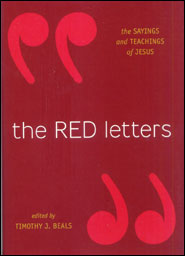 The Red Letters: The Sayings and Teachings of Jesus by Timothy J. Beals I have personally found this an eye-opening little book. Not only does it focus your attention on the words of Christ, it also breaks them down into two sections 1) The Sayings of Jesus, and 2) The Teachings of Jesus. This “carry-a-long” book helps one get a sense of the words of Christ in a more personal way. It also allows one to grapple with the integrity of Christ in his humanness and his divinity. I highly recommend this book for devotional use.
 A Serious Call to a Devout and Holy Life, by William Law It was Quaker Author and Teacher, Richard Foster, who introduced me to William Law’s classic. It is in reading the pages of this book that one will begin to touch on the keys to a life of Integrity. Law’s work is fresh and vivid, as he illustrates the holy Christian life as one lived wholly for God. Law’s thoughts on prayer, personal holiness and service to the poor will resonate with many contemporary readers. At times you have to remind yourself that this book was written in the 1700’s.
 Doug Dennis and the Flyaway Fib, by Darren Farrell If you were in church this past Sunday you heard Pastor Bob give a children’s message based on this book. This is an excellent way to introduce the topic of “truth-telling.’ For those familiar with the VeggieTales, it may remind you of “Larryboy and the Fib from Outer Space” – another excellent choice in video form.
 The Day America Told the Truth, by James Patteson & Peter Kim This is the result of a national survey on private morals. This look at America’s deepest secrets reveals shocking confessions by Americans about their views on sex, crime, punishment, rape, the death penalty, and more. You may remember it being a topic of discussion on the Oprah Winfrey Show. The studies that began with this book continue since it’s original release in 1992. The study was a factor in Gallop and Barna giving so much attention to morals and beliefs in America. It may be out of date, but it did begin a revolution of sorts in the statistic business and helps us get a picture of who we really are. Such a definitive study has not been attempted since. This is a good one to borrow from the library.
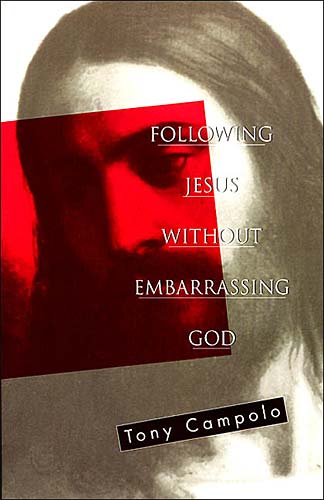 Following Jesus without Embarrassing God, by Tony Campolo Looking for balance in your life without getting over zealous or “holier than thou”? With candor and insight, Tony Campolo passionately hits on hot button issues that impact the Christian life, including how to: protect yourself from technology without becoming Amish; have a devotional life without becoming a monk, and figure out the will of God without hearing voices from Heaven. This may be a challenging book for some and if anything will help you begin processing many of the issues related to integrity. After tackling this book challenge yourself with Tony Campolo and Brian McLaren’s book, “Adventures in Missing the Point: How the Culture Controlled Church Neutered the Gospel“.




 The American Paradox: Spiritual Hunger in an Age of Plenty, David G. Myers:





 Silverton Friends Church