Seeing Spiritual: Resources

We are now about half-way through our current sermon series, “Seeing Spiritual.”  We have already looked at things, places, and this past week we talked about relationships.  In doing that Pastor Bob has shared several books each week to help resource those who would like to delve a little deeper into developing their spiritual literacy.   Below are a few of the books that have been suggested (descriptions of books from Amazon.com):
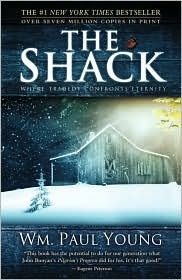
The Shack by William P. Young:  In a world where religion seems to grow increasingly irrelevant The Shack wrestles with the timeless question, “Where is God in a world so filled with unspeakable pain?” The answers Mack gets will astound you and perhaps transform you as much as it did him. You’ll want everyone you know to read this book!


Dakota: A Spiritual Geography by Kathleen Norris: Kathleen Norris invites readers to experience rich moments of prayer and presence in Dakota, a timeless tribute to a place in the American landscape that is at once desolate and sublime, harsh and forgiving, steeped in history and myth. In thoughtful, discerning prose, she explores how we come to inhabit the world we see, and how that world also inhabits us. Her voice is a steady assurance that we can, and do, chart our spiritual geography wherever we go.

Extremely Loud and Incredibly Close by Jonathan Safran Foer:  Nine-year-old Oskar Schell has embarked on an urgent, secret mission that will take him through the five boroughs of New York. His goal is to find the lock that matches a mysterious key that belonged to his father, who died in the World Trade Center on the morning of September 11. This seemingly impossible task will bring Oskar into contact with survivors of all sorts on an exhilarating, affecting, often hilarious, and ultimately healing journey.

Blue Like Jazz: Nonreligious Thoughts on Christian Spirituality by Donald Miller: In Donald Miller’s early years, he was vaguely familiar with a distant God. But when he came to know Jesus Christ, he pursued the Christian life with great zeal. Within a few years he had a successful ministry that ultimately left him feeling empty, burned out, and, once again, far away from God. In this intimate, soul-searching account, Miller describes his remarkable journey back to a culturally relevant, infinitely loving God.

Love Does: A Secretly Incredible Life in an Ordinary World by Bob Goff:  Bob Goff has become something of a legend, and his friends consider him the world’s best-kept secret. Those same friends have long insisted he write a book. What follows are paradigm shifts, musings, and stories from one of the world’s most delightfully engaging and winsome people. What fuels his impact? Love. But it’s not the kind of love that stops at thoughts and feelings. Bob’s love takes action. Bob believes Love Does.

Click here for Pastor Bob’s personal review of “Love Does”

A Vision on Earth Sunday

A Vision – Wendell Berry

If we will have the wisdom to survive,

to stand like slow-growing trees

on a ruined place, renewing, enriching it,

if we will make our seasons welcome here,

asking not too much of earth or heaven,

then a long time after we are dead

the lives our lives prepare will live

there, their houses strongly placed

upon the valley sides, fields and gardens

rich in the windows. The river will run

clear, as we will never know it,

and over it, birdsong like a canopy.

On the levels of the hills will be

green meadows, stock bells in noon shade.

On the steeps where greed and ignorance cut down

the old forest, an old forest will stand,

its rich leaf-fall drifting on its roots.

The veins of forgotten springs will have opened.

Families will be singing in the fields.

In their voices they will hear a music

risen out of the ground. They will take

nothing from the ground they will not return,

whatever the grief at parting. Memory,

native to this valley, will spread over it

like a grove, and memory will grow

into legend, legend into song, song

into sacrament. The abundance of this place,

the songs of its people and its birds,

will be health and wisdom and indwelling

light. This is no paradisal dream.

Its hardship is its possibility.

Wendell E. Berry is a noted poet, essayist, novelist, farmer, and conservationist.

How “Spiritually Literate” are you?

As I have shared from day one at SFC, I believe life is a sacred journey.  Every day we are presented with opportunities, signs and encounters that point us to the active presence of God and his Spirit in the world around us.  Our previous sermon series on “Togethering” emphasized the need to learn to live faithfully with others — but is life just about other people?  We can definitely experience God moving in our lives through our friends, neighbors, and family, but we also experience something spiritual in objects, places, nature, and even animals.

We have known for quite some time, now, that the world is becoming more and more “biblically illiterate.”  We have even heard that people prefer being “spiritual” over “religious” or as Dan Kimball so aptly titled his book, “They Like Jesus, But Not The Church.”  I think one of the reasons for these shifts in verbiage is the lack of being able to see with “spiritual eyes” and make connections in the ordinary parts of life.

Many people never see, experience, or find time to cultivate the spiritual in this world – thus the spiritual becomes mythical, magical or simply non-existent.  Maybe we shouldn’t be so quick to label the world “biblically illiterate,” when there is a chasm that needs bridged spiritually first.

Protestant theologian Samuel H. Miller said, “In the muddled mess of this world, in the confusion and the boredom, we ought to be able to spot something – an event, a person, a memory, an act, a turning of the soul, a flash of bright wings, the surprise of sweet compassion – something where we ought to pick out a glory to celebrate.” 

What does it mean to be “spiritually illiterate” in the world?  It means that people have lost or chosen not to develop an ability to read the signs written in the texts of their own daily experiences.  Thus the more adept we become at reading the world spiritually around us, the more comfortable we will be with seeing God’s image in others, his work in our encounters, and his beauty in all of creation – thus creating a bridge for those in the world to see the importance of God in all facets of life.

My hope is that through our next sermons series (beginning April 29), we will become more “spiritually literate” learning to see that everything around us contains signs and wisdom into the mysteries of God.  Join us each Sunday as we explore how things, places, nature, animals, and much more help develop our spiritual literacy.

Grace and peace,  Pastor Bob

Visiting Friends from Nepal

Dr. Samson, Priscilla, and Prateek Retnaraj

Retnaraj10

After four years of CHE ministry in Nepal, many CHE training sessions are held to teach this unique form of Evangelism in Chitwan, Bardiya, and Chandranigahpur (Mahida). This holistic training is Bible based and taught to ordinary villagers using Jesus’ example to help ordinary peoples’ lives. It is what we now call church planting and church growth, and it has produced results which have amazed us! Most of those who have had this training are uneducated and poor, but after their participation it has brought about a change in their overall thinking and beliefs, and this has affected the lives of others in their own and other communities. They were helped to better understand the teaching of Jesus in the Bible, and that led to teaching others around them.

Analyzing the feedback given by the trainees after each training session was a great joy because it actually taught us, the trainers, how to do better. We were also surprised to learn that most of these trainees, on completion of their CHE training, were very eager to have more knowledge of the Bible and live life according to the Word of God.

The community in Dhamile, which once was a sleepy and lazy people, has become a vibrant one. They recently decided to have a Village Health Post manned by their own CHE-trained health workers, a Clean Drinking Water Project using Biosand filters, and to maintain a bodily waste program, which is an answer to our prayers for this community. They have understood their responsibilities, and now desire to have a “Healthy Mind and Spirit in a Healthy Body,” after four years of hard work in training them. Not surprisingly, fellowship groups and churches in Sunachourie, Budhi-Bhandar, and Parevakot (nearby communities), have been started by the efforts of the Dhamile church.

Join us as we welcome the Retnaraj family this Thursday evening, April 5 @ 6pm in the Green Room.  Please join us as we learn more about their health and development work in the name of Jesus in villages in Nepal.  Also, you will find out about what happens to the goats SFC sends to Nepal!


Resurrection gives full life now and forever

“The do it yourself, self-help culture of North America has so thoroughly permeated our imagination that we ordinarily don’t give attention to the biggest thing of all — resurrection.  And the reason we don’t is because resurrection isn’t something we can use or control or manipulate or improve on.” Eugene Peterson, (Living the Resurrection)

I love the days leading up to Easter Sunday. This is one of my favorite times in the church year.  Many people get caught up in Easter egg hunts and baskets, nice dinners or wearing new clothes to church.

For Christians, there should be no distraction with shopping, gifts or chocolate bunnies. Instead, the symbolism and beauty of these days should far outweigh commercialism. Our attention should be solely on Jesus and His resurrection.

Yet we are easily preoccupied. Sometimes it’s a struggle to see relevance in an event that took place so long ago. One big problem for Christians is that the resurrection has become an event that “happened,” instead of an ongoing part of our lives.

Preparing for Easter this year, I found Scripture verses that may help us to see anew the “resurrection life” we have been given. I use Eugene Peterson’s “The Message” edition of the Bible to emphasize this theme.

“The whole congregation of believers was united as one — one heart, one mind! They didn’t even claim ownership of their own possessions. No one said, ‘That’s mine; you can’t have it.’ They shared everything. The apostles gave powerful witness to the resurrection of the Master Jesus, and grace was on all of them.” Acts 4:32-33

Right in the center of those first Christians’ daily lives was the resurrection. It’s like the first cup of coffee in the morning, our eyes are opened, and we’re ready for the day. Christ has risen, just as He said. Because He did, everything is possible.

When we look at the cross through our modern worldview, we see it as the motivation for the first Christians. But the cross wasn’t the focus; it was the resurrection.

“If, when we were at our worst, we were put on friendly terms with God by the sacrificial death of His Son. Now that we’re at our best, just think of how our lives will expand and deepen by means of His resurrection life! Now that we have actually received this amazing friendship with God, we are no longer content to simply say it in plodding prose. We sing and shout our praises to God through Jesus, the Messiah!” Romans 5:10-11

The resurrection was the ultimate reminder of God¹s power and love. The first Christians basked in it, rejoiced because of it, lived in it — every single day. The resurrection wasn’t just about receiving eternal life; it was about fully living life in the here and now. This life after the resurrection is full of opportunities and possibilities.

“God’s Spirit beckons. There are things to do and places to go! This resurrection life you received from God is not a timid, grave-tending life. It’s adventurously expectant, greeting God with a childlike ‘What’s next, Papa?'” Romans 8:14.

It provided a barrier against all the hazards and hardships that the first Christians faced, and provided them with a glimpse of God’s glory and His grace. It was motivation enough to endure, but not just endure — to undergo the worst that life could bring and ultimately take a stand.

“I look death in the face practically every day I live. Do you think I’d do this if I wasn’t convinced of your resurrection and mine as guaranteed by the resurrected Messiah Jesus? Do you think I was just trying to act heroic when I fought the wild beasts at Ephesus, hoping it wouldn’t be the end of me? Not on your life! It’s resurrection, resurrection, always resurrection, that undergirds what I do and say, the way I live.” 1 Corinthians 15:31-32.

Friends, we need to learn to “live the resurrection.” We’ve been given a new lease on life, as well as a new life today and a new life tomorrow and beyond. Too often we take this resurrection for granted, become complacent and “run through the motions” of faith. We must remember that we have been led from prison cells into the wide open spaces of God’s love and eternal power.

“So if you’re serious about living this new resurrection life with Christ, act like it. Pursue the things over which Christ presides. Don’t shuffle along, eyes to the ground, absorbed with the things right in front of you.  Look up, and be alert to what is going on around Christ — that’s where the action is. See things from His perspective.  Your old life is dead. Your new life, which is your real life, even though invisible to spectators, is with Christ in God. He is your life.” Col 3:1-3.

Look up and come together to see where our freedom takes us — where this incredible opening we have in the veil of this life leads us into “resurrection life” today, tomorrow and the days after that.

Dr. Robert S. Henry, Pastor: Silverton Friends Church

Join the celebration…

Silverton Friends Church invites you to join us for a weekend of events preparing us for CELEBRATION!

Good Friday Service  – April 6, 7pm

Easter Egg Hunt – April 7, 10-11:30pm

Easter Breakfast and Family Craft – April 8, 9am

Easter Celebration Worship – April 8, 10:45am

(All events will take place at SFC)

“Togethering” through Intimacy – Questions

In this past Sunday’s sermon on “Togethering” as it pertains to intimacy in the Christian Faith, Pastor Bob challenged the couples and close relationships in the meeting to ponder some questions.  As has been custom during this entire series, these are not easy questions to simply answer.  It may take some time wrestling through these with that significant other.

Do you sense mutual loyalty in your marriage or relationship?

Do you sense mutual affection?

Is each individual respected, loved, treasured for their uniqueness?

Do you dream, set goals, have hopes, successes together?

How well do you handle the tragedies, foibles illnesses, conflicts?

When was the last time TOGETHER you had a conversation about some of these things?

As Pastor Bob shared on Sunday, when thinking through questions or conversations about intimacy, it often becomes problematic.   Obviously, these questions could raise more questions, suggest topics of a personal nature that may take more time to process – or to process with others in a protected setting.  Consider that this week as you work through intimacy in your daily life. 

Next week Pastor Bob will continue the series with Togethering: When Things God Bad.  Where he will explore what happens when breaches occur in our various communities and some first steps toward healing.


Questions to Ponder this week on “Togethering”

This past Sunday, Pastor Bob preached on “Togethering: At Work, School, & Play.”  Each sermon in this series, we have been presented some questions to ponder.  This week the questions were about the place where God has “called” you on a daily basis to be “Togethering.’  We challenge you to take some time this week to process these questions:

Does you workplace, business, school see itself as a community?  What kind of person-oriented environment does the institution strive for, if any?

How are people treated?   What does that say about the persons in authority?  About the others?

Who’s really in charge?  Who has the power “on paper” and who has it in practice?  Who makes the decisions?  What input do you have?

How flexible are the power people? How open are they to new ideas, new people, new ways of doing things?  If you are in a power position, how open are you?

What spoken or unspoken rules are there about how to do business and how to treat others?  How are they enforced?

What are the organizations goals, and how respectful are you of them? How comfortable are you in supporting those goals?  What influence do you have on those goals?

What personal or work habits seem incompatible or unhelpful in that environment?  What would it mean to you to change?

What theological and ethical precepts form the basis of your identity?  How well do they fit the corporate or school mold?

For some these questions may help you discern if you are in the right place.  For some, you may be challenged to make some changes.  Still others may realize they must look with new eyes on certain issues within their daily routine.

If you find yourself feeling “out of kilter” it doesn’t necessarily mean that you’re in the wrong place.  It could be that you just don’t have enough time for “play” in your life.

Think about it…

Do you play at work – that is provide yourself with some moments of lightheartedness and enjoyment with your coworkers?

Do you take a regular day off, a day for Sabbath and for rest?

Do you have hobbies or a variety of pleasant interests?

Do you play too much by spending long hours in front of the computer or television?

For some these last four questions may be where you need to begin this week.

(Questions adapted from “Community” by Easterling & Warren)